Litter Critter marklitter critterField notebook

FIELD FIRST. ROBOTS LATER.

More care.
Less litter.

What if a small machine could lend a hand to the people caring for our parks?

We’re studying the work before building the robot. Four possible designs. Real terrain. Better questions.

Explore a mission Meet the four concepts
CONCEPT 02 / SCOUTLOW BODY. SHORT REACH.
Design illustration · Not a built prototype
FOR THE PLACES WE SHAREResearch → Design → Bench tests → Field evidence01 / EXPLORATION

01 / MISSION STUDY

Start with
the ground.

Every route asks something different of a robot. Choose an illustrative hotspot, assign a concept, and see which assumptions matter.

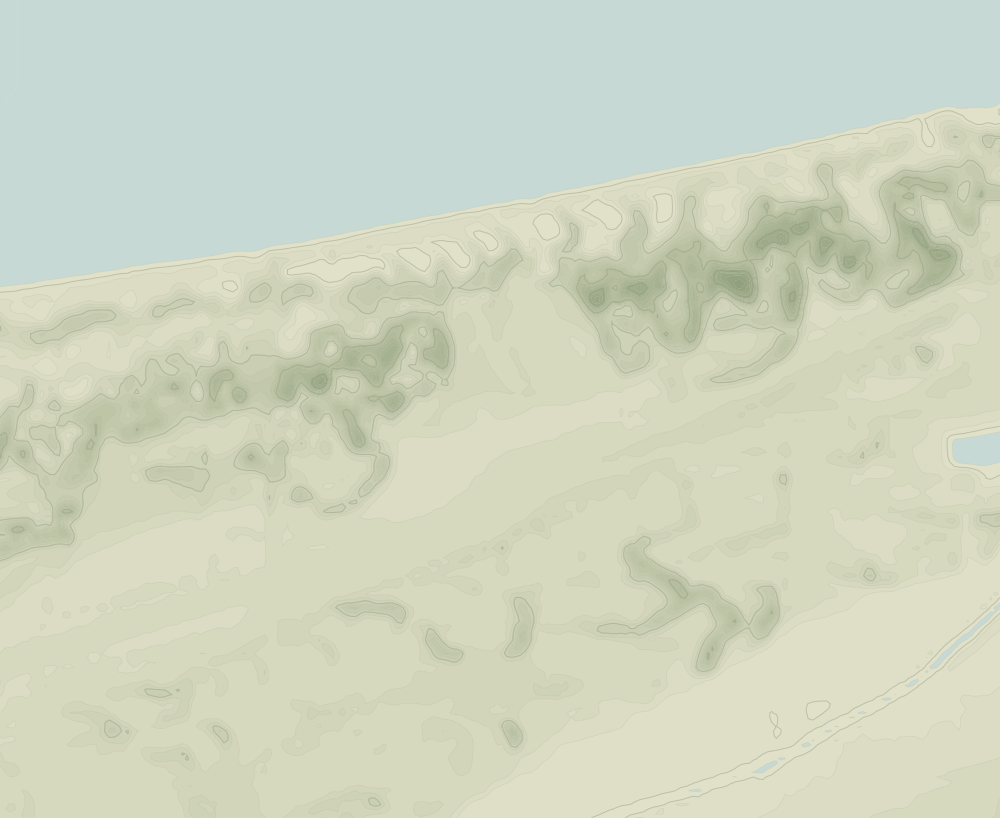
TERRAIN STUDY / INDIANA

West Beach area

ILLUSTRATIVE MISSION
Real USGS elevation contours near West Beach, Indiana. Two-meter bands show low shoreline terrain and higher inland dunes. The mission overlay is invented. LAKE MICHIGAN
Illustrative hotspotConcept route500 m approx.

Real elevation. Invented mission. USGS 3DEP terrain, resampled to about 22 m. Hotspots, routes and exclusion zones are illustrative, not park observations or approved access. Data notes ↗

Independent research concept. No National Park Service affiliation, field trial or partnership is implied.

02 / FOUR WAYS TO LEND A HAND

Different bodies.
The same question.

The right shape depends on the work. These are alternatives to investigate, not a product lineup. No concept has demonstrated pickup or terrain performance.

01

HUMANOID / SPECIALIZED ATTACHMENTS

Steward

An upright helper with interchangeable pincers and a shallow scoop. Reach around fixtures, then bring each item to a torso bin.

THE QUESTIONIs extra reach worth the balance and servicing cost?
Reach, terrain & tradeoffs
Reach and small litter
Two arms could work at different heights. Tiny wet fragments need a close camera and tested pincer or scoop contact.
Ground pressure and slopes
Broad feet distribute static load, but stepping concentrates it. A loaded arm changes balance; no safe slope limit is known.
Servicing and oversight
Removable bin and tools; many exposed joints to clean. A human would approve initial pickups and remain ready to stop motion.
02

QUADRUPED / SHORT GRABBER ARMS

Scout

A low four-legged body with two small picker arms. Keep the ground-to-tray movement short and the carried litter low.

THE QUESTIONCan short repeated pickups offset the complexity of legs?
Reach, terrain & tradeoffs
Reach and small litter
Short front arms reduce transfer distance but require careful repositioning. Wet film and cigarette butts remain bench-test priorities.
Ground pressure and slopes
Foot placement may help around obstacles. Small contact patches can sink into sand; side slopes and loaded stability are unproven.
Servicing and oversight
Lift-out tray, washable grippers and protected joints are design goals. An operator would inspect contacts and approve route boundaries.
03

SIX WHEELS / SIDE PICKER

Rover

A low articulated chassis on broad tires, with a side-mounted arm. A candidate for maintained routes and easy access to its bin.

THE QUESTIONCan simpler travel leave more time for careful collection?
Reach, terrain & tradeoffs
Reach and small litter
The side arm reaches path edges while the chassis stays on a maintained surface. Small-item pickup needs close inspection and interchangeable tips.
Ground pressure and slopes
Wider tires increase contact area; actual loading depends on mass, tire pressure and soil. Loose sand, curbs and cross-slopes still need testing.
Servicing and oversight
A slide-out bin and accessible wheel modules could simplify service. A human would define safe route edges and manage uncertain objects.
04

TRACKED BASE / LOW GANTRY

Crawler

Broad tracks carry a short-stroke picker and an optional guarded suction tool. Investigate selective collection on open, approved ground.

THE QUESTIONCan small-litter handling avoid taking the ground with it?
Reach, terrain & tradeoffs
Reach and small litter
A gantry covers only the area immediately ahead. Suction might help with tiny pieces, but filters, wet adhesion and unintended sand intake are unresolved.
Ground pressure and slopes
Tracks spread load over a larger area; turning can shear soil. Traction, braking and disturbance must be measured under load.
Servicing and oversight
Removable filters and debris cassette; inspect tracks for entanglement. Never infer permission to enter dunes or sensitive habitat from mobility.

AI-generated design illustrations. Forms and mechanisms are exploratory, not engineering drawings, supplier products or built prototypes.

03 / THE WORK BEFORE THE MACHINE

Listen. Measure.
Come back.

The first milestone is a useful understanding of one repeated cleanup task. A robot is only worth pursuing if it helps the people doing that work.

01

Find the recurring work.

Ask park crews and cleanup organizers where litter returns, what they collect and what takes the most effort.

Indiana Dunes: Trash Trekkers ↗
02

Use what already exists.

Understand current tally sheets, photos and survey records. Record coverage, time and intervening cleanups before comparing counts.

NOAA: repeatable monitoring ↗
03

Test the whole job.

Measure misses, unintended pickups, unloading and every human intervention. Keep tiny litter and ecological disturbance visible.

Great Lakes: cleanup data ↗

A LONG-TERM RESEARCH QUESTION

What would actually
make cleanup easier?

We’re seeking conversations with park staff, conservation teams and data custodians. Existing records and candid constraints come first. Prototypes and field work would follow only if the evidence supports them.

Open the field notebook ↗
Data, methods & limits

The terrain is real.

Elevation comes from the USGS 3D Elevation Program, retrieved September 22, 2026. USGS makes 3DEP products available without use restrictions. This visualization uses a 220 × 180 resampled grid around West Beach, with 2 m elevation contours and an approximately 22 m ground spacing. Colors encode elevation, not vegetation or habitat. Source and processing metadata ↗

The mission is illustrative.

Hotspots A–C, surface descriptions, the base, paths, exclusion zone, item counts and service time are invented to explore design questions. The route is a drawn line, not a navigation solution. Approximate distance is calculated from the line on the map; travel, handling and service time are assumptions. Nothing here estimates measured Indiana Dunes litter density or demonstrates a robot’s performance.

The next evidence is local.

We have not verified a park dataset that links recurring litter, survey effort and crew workload. A cleanup total alone cannot tell us how quickly litter returns or how many robots a place needs. Research cooperation and access remain to be established. This project is independent of the National Park Service and all cited organizations.